

PREPARATION
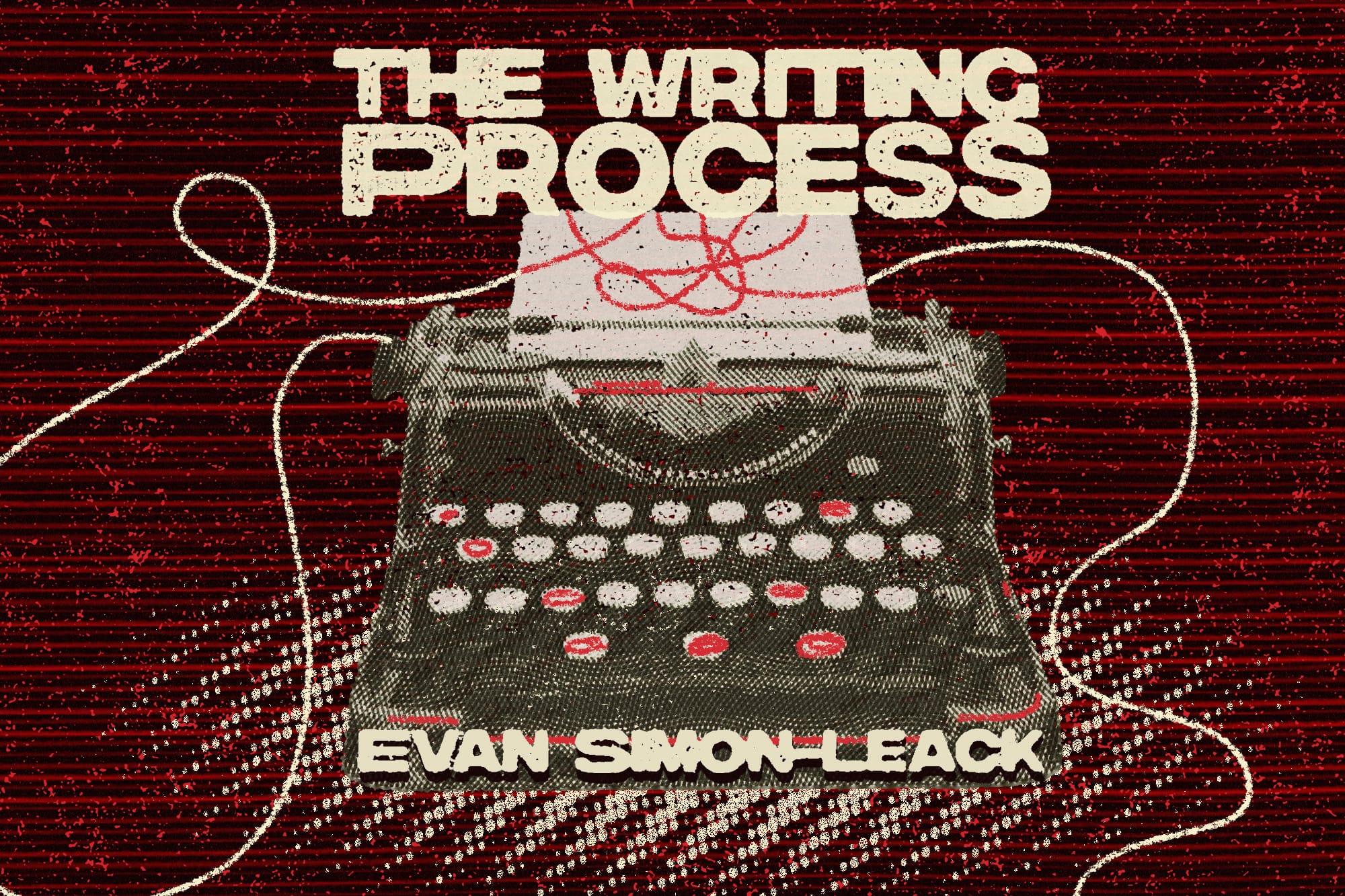
Success starts with proper preparation—gathering supplies and finding a suitable place for writing, free from distraction and interruption. Ideally, an isolated location. The screaming tends to make some people uncomfortable.
Requisite Supplies:
- Mechanical typewriter
- Paper
- Knife
- Hot glue gun
- Clean rags
- Isopropyl alcohol
A completely mechanical typewriter (sterilized) is ideal. Electronic equipment has a tendency to short out when the creative juices start flowing.
Plug in the glue gun, then get yourself comfortable. Take the cover off the typewriter. Pull the ink ribbon out of the spools and toss it. Find a good vein—I recommend the forearm—then use your knife to slice an incision next to it. Gently push it towards the cut and very carefully pull it out. You might feel unnerved by the sliding and tugging sensations as you procure enough slack. This is natural. Keep at it until you have enough to wrap around the spools and enough slack to type comfortably. Replace the spools in the typewriter and feed the vein through the ribbon guide. We’ll activate the auto-reversers manually.
You’re probably wondering, why not use someone else’s vein? While it’s a lot of fun, it has the same issue as using AI; it’s not your creative juices on the page.
Now, feed your first blank page in and slide the carriage into its ready position. We’re all set to start writing!
WRITING
With a mechanical typewriter, the key to a nice, solid print is violence. The typewriter is your dear friend. Thus, strike it with all the vicious force with which you would your dearest friends if only it were socially acceptable to do so.
You may find at the start that words are only oozing slowly from you. Don’t be discouraged! Keep at it, find your rhythm, and you’ll be gushing across the page in no time at all. I often find words spurting out of the typewriter perfectly in sync with the beat of my heart.
It’s entirely normal if some of your soul spills across the typewriter and desk. Just try to get as much of your creative juices onto the page as possible. The occasional splash across your workspace is inevitable.
By now your fingers should be bleeding. If they aren’t, you’re not hitting the keys hard enough. Remember, the typewriter is a dear friend. Picture a specific dear friend, if you find that helpful. On days where your inspiration really takes off, you might notice a new, jarring sensation and additional clack of each key. Don’t be alarmed! You’re just on such a roll you’ve hit bone. Congratulations! Sometimes you’ll need to use your knife to remove loose gristle, but do so only if it impedes your typing—you don’t want to interrupt your flow.
It’s of vital essence that you don’t pour your entire heart onto the page in one go. We want to establish a sustainable practice, so pound out bits of your soul at a time.
Once you’re finished for the day, remove your vein from the typewriter.
There’s no getting that cat back into the bag, as they say. As it’s a loop, there’ll be two places to sever, and at both of these points you want to bite through the blood vessel, as close to the flesh as possible. Biting crimps the vein, so less blood squirts out. A single, strong bite is ideal. Unfortunately, I have a jaw deformity where my teeth don’t properly align, often requiring a significant amount of chewing to get all the way through.
Afterwards, splash some isopropyl alcohol on there and cauterize both spots with the tip of the glue gun (it should be nice and hot). Some writers like to bite down on something, like a clean dog chew. I just prefer screaming.
Now we deal with our fingers. Sometimes in the typing frenzy, we’ll end up with ragged bits of flesh, bone, or nail jutting out. It’s often best to carve these off. I prefer an American military knife such as a Ka-Bar. The serrated section helps greatly with sawing through bone. It also makes a wonderful sound as you saw, reminiscent of a Thanksgiving carving (or really any holiday involving knives and relatives). Once again, sterilize and cauterize, biting down or screaming as desired.
SUBMITTING
Now that you’ve spread it all over some paper, it’s time to try and sell that little piece of yourself.
First, I should note that the stench, gristle, and overall unsanitary condition of one’s manuscript has led to many publishers preferring online submissions. This is what family and your dwindling circle of friends are for, so have them type up your manuscript on a computer. It’s still a piece of your soul, just in digital form.
I’m sure some of you are thinking, “What’s he talking about? I have lots of friends!” It’s okay, you’re new. Keep putting in the time, keep writing, and you’ll get there eventually.
Where you submit will vary depending on length and genre. Submission Grinder is a fantastic free resource for finding markets. People often suggest the “shotgun approach,” but I found this left too many dead editors. Still, submit your piece everywhere you can.
The odds of actually getting published are very low. Fortunately, all the rejections you receive will crush your soul and keep you drowning in the lightless abyss of hopeless despair that’s essential for writing.
Some of my readers have asked if those chunks of their hearts, or even their entire selves, are worth anything if they can’t sell them. I’d certainly like to think so. Clearly not money, but worth something in a more insubstantial sort of way. Never forget that an author is a prostitute of the soul, struggling to sell pieces of themselves for the enjoyment of others.
Well, that’s all there is to it. By now I’m sure you’re champing at the bit. Go get ‘em, Tiger!