
How to Avoid Your Problems
H.C. Ricci
Maureen Bowden

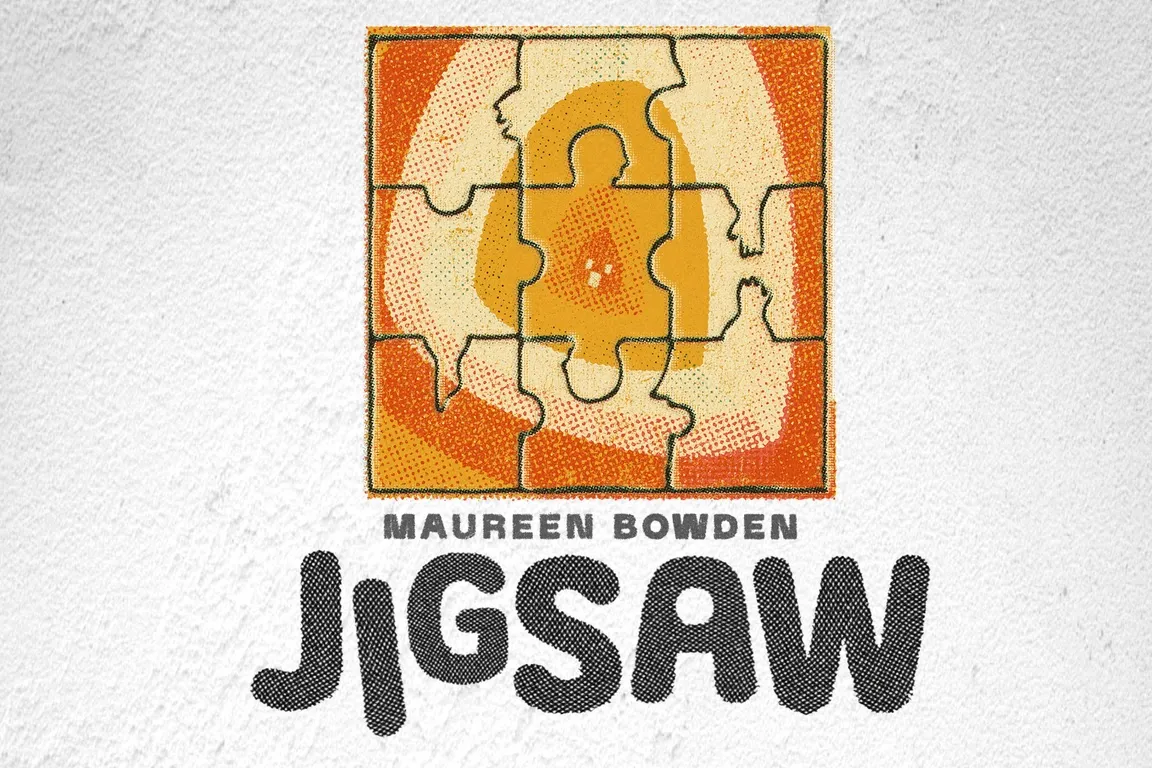

Mandy hated New Year. It left her feeling desolate, in spite of the whisky and sleeping pills that helped her to function on less harrowing days. It was two years ago, on New Year’s Eve, since her fifteen-year-old son, Charlie, ran away. After a thorough search, full media coverage, and all the usual legal procedures, the police had made no progress and Mandy had given up hope. He’d be seventeen now—no longer a child—and if he were still alive, he’d probably have no use for her.
She recalled the jigsaw puzzle in a plain cardboard box that Heather had given her last year. ‘No pieces missing’ was scribbled on the lid. Heather had said, “I thought it might take your mind off things for a while.”
The box remained under her bed unopened. Why not give it a chance to distract her from her misery? Make a New Year’s Resolution. Stop feeling sorry for yourself, Mandy. Do the jigsaw and try to smile. She’d forgotten how to do either. It was time to remember. It would also pass the time until she returned to work after the holiday.
She retrieved her jigsaw board from the back of the airing cupboard, placed it on the breakfast table, and emptied the box’s contents onto it. No picture was provided.
The pieces included every shade of every colour, from black as the pit of despair, to summer-sky-blue reminding her of a time when her spirits were high and life was good. She selected those with a straight side and formed the outside edge.
First step completed, she started to fit the pit of despair pieces together. Their blackness evoked memories of her childhood: her father’s death in a street-gang knife attack, her mother’s descent into alcoholism, and herself screaming, as she was taken to ‘Cornflower Meadows’, a council care home for children.
The jigsaw’s completed dark area revealed no distinguishable feature and she moved onto the red shades: scorching splinters that stabbed her consciousness, recalling the confusion and heat of desire she’d experienced with Tyler, another unwanted care home teenager—older than her—nearing his time to leave care and eager to prove his manhood. She was fifteen when she gave birth to their son. Scared and defiant, Tyler refused to take any responsibility. He left the home and vanished from their lives.
She named her baby Charlie and begged Connor, her harassed and overworked social worker, to let her keep him. He said, “I’ve discussed the situation with the management team, Mandy, and persuaded them that with support you have the makings of a good mother.” He grinned. “It gave them an easy way out. They agreed it would be simpler to leave him with you than to have another problem on our hands. We have enough aggravation already. Charlie’s yours.”
Back to the jigsaw. With the red section completed, she moved on to the multicoloured pieces: the yellows, pinks and purples that reminded her of the first time she saw ‘Buds and Blooms Florist’. It came about a few months before her eighteenth birthday when she would be too old to remain at the care home. Connor said, “The florist’s name is Janet. Her husband, Andrew, is something big with the railways. They’ve offered you the small flat above Janet’s shop. Get your coat. I’m taking you to meet them. Bring Charlie.”
She sat in Connor’s car, feeling sick with apprehension, but when they entered the shop the fragrance and colours of the flower arrangements lifted her spirits. Three-year-old Charlie pointed at them and said, “Dey’s pwitty.”
Connor introduced them. Janet and Andrew cooed and fussed over the toddler and they shook Mandy’s hand. Janet said, “I’m looking for an assistant in the shop. Our two elder children are married now and have careers of their own. Our youngest daughter, Heather, isn’t interested. She’s staying on at school and hoping to go to university.”
Mandy said, “She must be very clever. I was pretty useless at school.”
Janet laughed. “Heather’s pretty useless at flower arranging. Nobody’s good at everything, Mandy, but everyone’s good at something. The job’s yours if you want it. The upstairs flat is part of the deal.”
Mandy nodded. “Yes, please.” She pointed to a display of pink roses mingled with silver-leaved foliage. “I wish I could make something as lovely as that.”
“I’ll teach you. It’s a useful skill to have. People will always need flowers.”
She moved into the flat and made it a home for herself and Charlie. Janet taught her the art of floral design and she was happy.
She and Heather became good friends. Mandy asked her, “What do you want to study at uni?”
“Psychology. It fascinates me. So do paranormal phenomena but they won’t be on the curriculum. It’s just my hobby. Do you have one?”
“Jigsaw puzzles.”
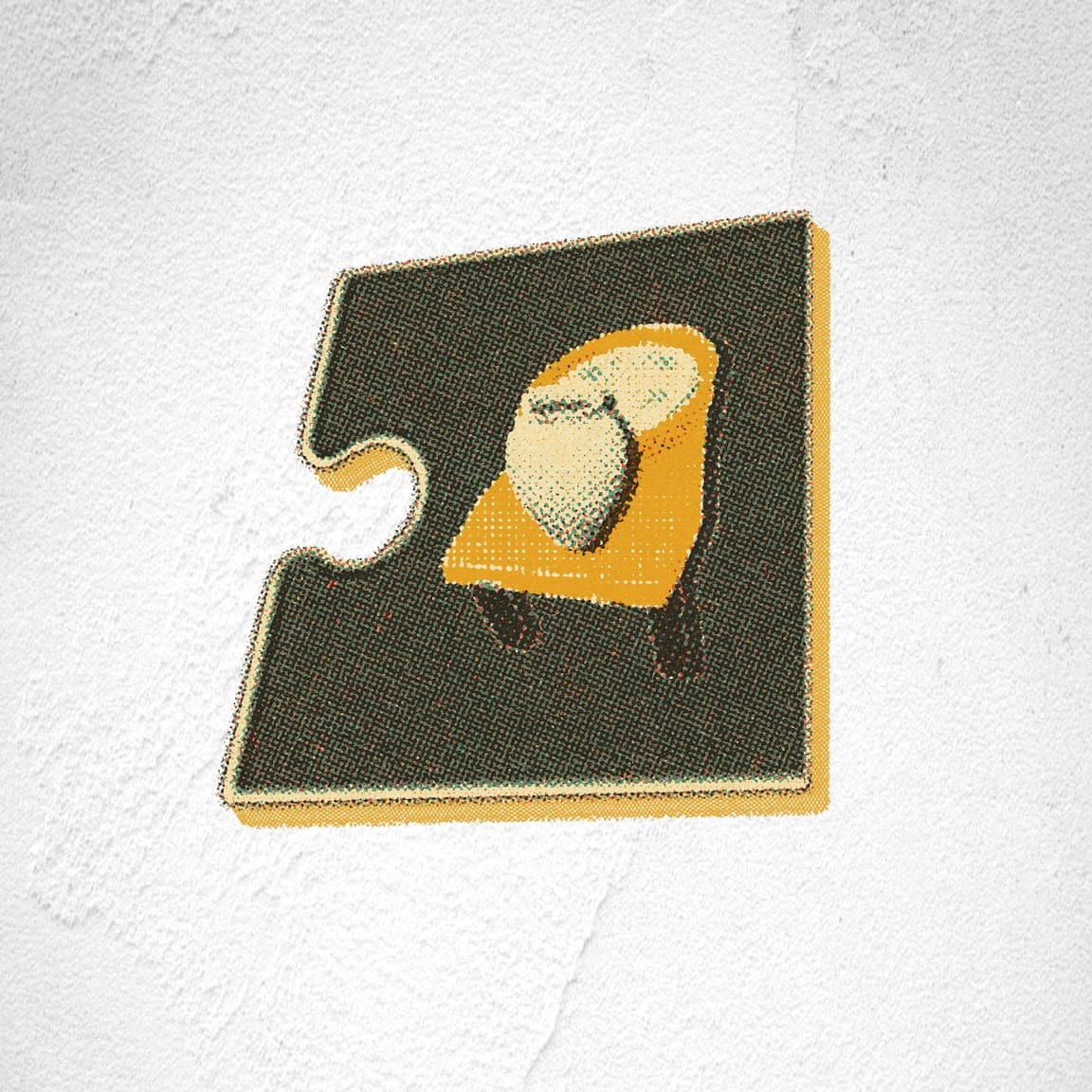
Hobby or not, this one was more of a puzzle than most. Mandy stared at it and rubbed her eyes. She still couldn’t work out what the picture was, but she was becoming so engrossed in it she realised she’d stopped reaching for the whisky bottle. No doubt that was a good thing. It made her mind fuzzy. She should try to manage without it. That night she deliberately omitted taking her sleeping pill. She slept through until morning without it.
The next day, her head was clearer and something was nagging at her. It was connected with Heather, but she couldn’t think why. She remembered a flower arrangement she’d made with special care, but its significance evaded her. She focussed on the jigsaw. The blue and green pieces awaited attention: the colours of summer skies and green fields flashing by from the windows of a train. Charlie was five years old. In the school holiday Andrew had given her a railway pass. “You can take him travelling all over the UK for free, Mandy. Go and have fun.”
She took him to Blackpool. First stop was the fairground. They skidded down the helter-skelter, rode the roundabouts, and dodged on the dodgems. They screamed, laughed, and hugged each other. Mandy felt she was finally experiencing the childhood she’d never had.
Their next trip was to the Cheshire countryside around the Macclesfield canal. They walked hand in hand along a narrow road from the town of Bollington to the village of Laurel Tree. On the outskirts of the village, they found a large craft centre. It contained stalls and workshops in which artists, sculptors, soft toy makers, jewellery makers, and potters demonstrated their skills. A young man sat at a potter’s wheel, shaping clay into a perfect bowl. Charlie stood watching, fascinated.
The potter grinned at him and called, “What’s your name, mate?”
“Charlie.”
“Hi, Charlie. I’m Alex. How old are you?”
“My number’s five. What’s yours?”
“Twenty-three.”
Charlie gasped. “That’s even older than my mum.”
The young man turned to Mandy and gave her what she considered a rather flirty smile. She felt an unfamiliar flutter and for a moment she wondered what her life would be like if she had a partner to share it.
On the way back to the train station Charlie said, “How did the man with the wheel turn that soft stuff into a bowl?”
“While it’s wet he can twist it into any shape he likes and when it dries it stays like that.”
“I want to be a potter’s wheel man when I grow up. Do people get made when they’re wet and stay people-shape when they dry?”
“People don’t get made by a potter’s wheel, Charlie.” She braced herself for the next question.
“Why?”
“Because it’s not the right stuff. If they were made from it they wouldn’t have a brain”
“Oh, Mrs Fitzpatrick, my teacher, told us about brains. It’s the box in our head that holds all the things we know about. She knows about everything so she must have a big brain.”
Mandy felt on safer ground; grateful to Mrs Fitzpatrick. “I’m sure she does but she can’t know everything or it would be so big it wouldn’t fit in her head. She must know more than you and me though, because she’s older than us. She’s had more time to learn.”
“What’s her number?”
“About forty.”
“Is that older than the man with the wheel?”
“Yes.”
“So she’ll pobly die soon.”
“Probably.”
“That’s what I said: pobly”
Charlie fell asleep on the train. She held him on her lap and smiled. She didn’t need a partner. Her son was enough.
The following day they took the train to North Cornwall. At Tintagel on the Atlantic coast they sat on the beach eating ice cream and then they paddled in the breakers. She was overawed and a little scared by the vast and untamed ocean governed only by the constraints of the moon. Charlie ran, laughing along the shore while Mandy chased him with a towel and his shoes and socks. Later, they explored the ruins of the castle reputed to be King Arthur’s birthplace. She told him tales of the mythical king, the Knights of the Round Table, and Merlin the Magician. Charlie listened, wide-eyed and engrossed in the magic that every child deserves before they need to confront the realities of adulthood.
On the train ride home he said, “Can I be a knight when I grow up and sit at Arfur’s big table?” The potter’s wheel was apparently forgotten.
“You can be anything you like, Charlie, but knights don’t wear armour and wave swords about anymore and they don’t kill people.” She shuddered and shook off the image of her father lying in the gutter, soaked in his own blood. In these times the killers wore hoodies and waved knives about.
The little boy looked disappointed. “Where have Arfur’s knights gone?”
“They lived a long, long time ago. They’re dead now.”
“What’s it like to be dead?”
“It’s like going to sleep and having very happy dreams.”
“What about?”
“Whatever you want them to be about.” She wasn’t sure she liked the way this conversation was developing but Charlie had cheered up.
“It must be intestin being dead.”
“Interesting.”
“That’s what I said: intestin.”
“Well, living is interesting too, isn’t it?”
He nodded. “Yes. I like being living.”
She hugged him. “So do I, Charlie.”
Back in the present she surveyed the jigsaw. The remaining pieces were stark white and smoky grey. The white was cold and pitiless, like Charlie when he plunged into adolescence. He sulked, snarled, and withdrew his affection. He responded with insolence and contempt to her attempts to reach him.
Janet said, “Don’t worry, Mandy. It’s his age. They turn into monsters overnight. I’ve raised three and they all had their monster moments, but it passes. Give it time. Eventually he’ll be your lovely, funny Charlie again.”
The grey clouds engulfed her life on New Year’s Eve. He’d been out all night. She searched the streets, terrified, returning home in tears. He staggered upstairs to the flat, smelling of alcohol, at 4.00 am.
She was furious. She screamed at him, “How dare you behave like this. I thought you were dead.” Losing control, she slapped his face.
He looked shocked, then angry; he screamed at her. “I hate you. I’m leaving and I’m not coming back.”
Before she could stop him he stumbled back downstairs and fled. She followed and tried to find him but he’d gone.
For the last two years Mandy despised herself for not behaving as a mother should and she’d lost her son. She had to find him.
Some instinct made her persevere with the jigsaw. There were two pieces left but she could see only one more space. She inserted the piece that appeared to be the best fit. The colours blurred, swirled and rearranged themselves into a country scene. She recognised the outskirts of Bollington on the Macclesfield canal. Two figures were walking along the road that led to the village of Laurel Tree: herself and Charlie.
The last of her confusion cleared. She understood everything. Heather couldn’t have given her the jigsaw last year. She’d died from a brain tumour three years before Charlie left. After losing him she’d blotted out the memory of Heather’s death. That grief was obliterated by her greater loss. It was comforting to know that somehow her friend had found a way to show her where he’d gone.
Where did the last piece of the jigsaw belong? It didn’t matter. She knew what to do now, but weariness swept over her. She needed to sleep first.
Next morning she took the train to Bollington. Her heart pounded as she walked along the road to the craft centre.
She found her son sitting at the potter’s wheel. He saw her, ran to her, and wrapped his arms around her. Sobbing, he said, “Mum, I’m so sorry. I was a spiteful little brat. Please forgive me.”
She was sobbing too. “It should be me apologising, Charlie. It was my fault. I was the adult.”
He laughed through his tears. “Yes, but only just. We grew up together.”
Still clinging to him, she saw someone approaching them. He said, “Hello, Mandy. Charlie talks about you all the time.”
She recognised Alex and some of her anger returned. She asked him, “Why didn’t you tell the police my son was here?”
“He made us promise not to, or he would have run away and put himself in all kinds of danger, so we took care of him but we let him make his own decisions.”
Charlie said, “Don’t be angry with Alex, Mum. He’s right. I would’ve run away and I wouldn’t have been able to look after myself. I was a stupid kid back then.”
“You should have let me know you were safe.”
He nodded. “I know, but I was scared you’d hate me.”
“I couldn’t hate you, Charlie. I want you to come home.”
He shook his head. “I want to stay here. It’s great. You could stay too. Please Mum.”
“How can I? What would I do for a living?”
Alex said, “Here’s a proposition for you. Charlie’s told me you’re an expert at floral design. We don’t have a floristry section in the craft centre. It would make a great addition and provide you with a good income. People will always need flowers.”
“But where would I live?”
“We’re a commune. We have living quarters here.”
“Charlie said, “You can share mine, Mum. There’s plenty of space.”
A year later Mandy and Alex were married in the village church. Janet made Mandy’s bouquet, Andrew walked her down the aisle and Charlie was the best man. The folk from the craft centre showered them with confetti.
The following year Mandy and Alex’s daughter was born. They called her Heather. The final piece of the jigsaw slipped into place with a satisfying click.
✱ Support the writer
Tip the author $2+$10+ earns the story's house trading card, $20+ the limited edition. We email you a claim code.
50% of tips go straight to the author. The rest covers processing fees and keeps Foofaraw running. Every dollar accounted for.