
🛝 The Lion Slide
Mark Granger
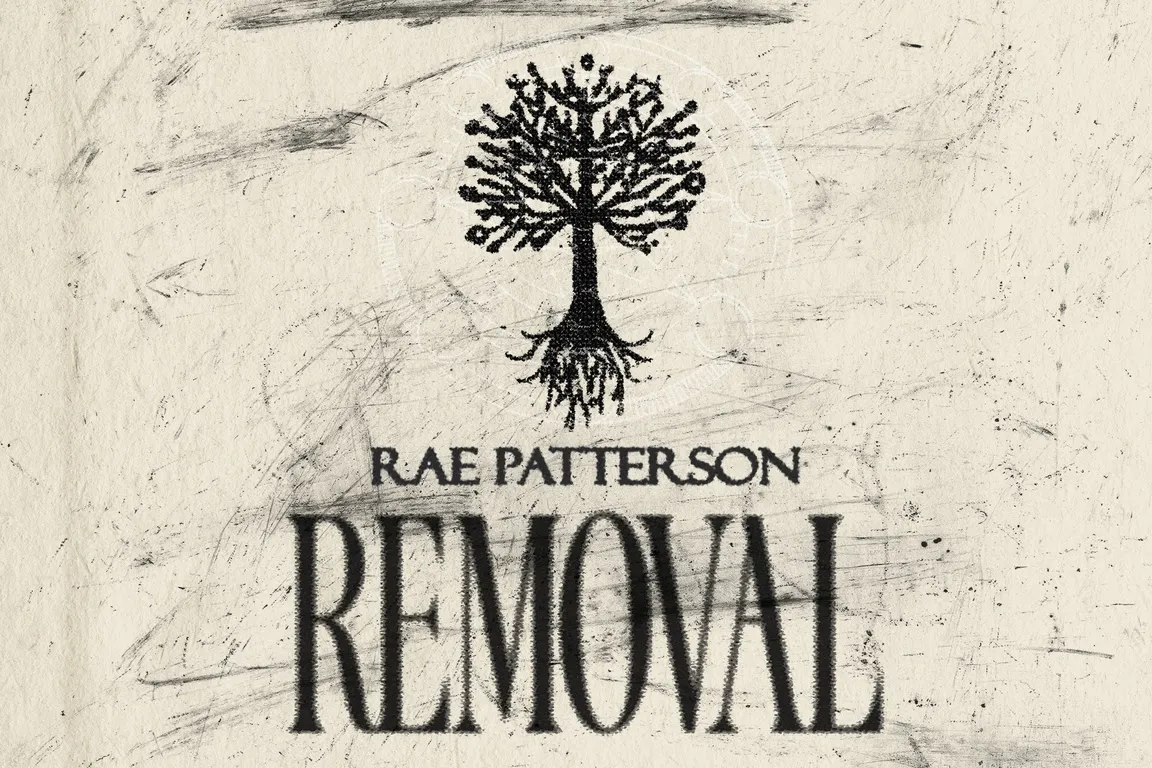
Rae Patterson

“Jettison Tattoo Removal, Negotiable Fee.”
The sign, old-fashioned gold script on a dark wooden plaque, hung in a window between a Black barber shop and a corner store advertising money transfers. A smaller wooden “Open” sign hung from the bigger sign.
It’s been two years since I got that tattoo, with Terry beside me on the other table getting a matching one. It was his first one and I was worried about how much it would hurt him, but he had such a high pain tolerance.
It wasn’t my first tattoo. As a matter of fact, we had a hard time finding a good spot for it. There aren’t too many women with as much ink as I have. Sometimes I thought I must be able to feel them on me, like the Illustrated Man could, but the only one I could ever feel was the one from that day, a tree of life with his name woven into the branches, matching the tree of life holding my name on his chest. I could feel it now, above my left breast, its branches pressed into me like an inlay.
I opened the door and entered. A soft bell rang.
The shop was small, with a pair of couches facing each other over a coffee table littered with magazines. There was no tattoo-removal gear in sight. The glass-fronted shelves beneath the empty wooden counter displayed an odd selection of objects: glass vials with multi-colored contents, loose gemstones, carved stone boxes. A few framed art deco prints decorated the walls. The air smelled of furniture polish.
An elderly man came through a curtain and sat on a high-backed stool behind the counter.
“Welcome,” he said. He wore a dark suit, and had a long, pale, aristocratic face, dark eyes, and a full head of improbably dark hair. Gold rings with multiple gems, red and darker red, glinted on his long-fingered hand which rested immobile on the countertop.
“Hi,” I said. “What do you mean, negotiable fee? I don’t have a lot of money.”
“I charge depending on the value to me of removing the tattoo.”
“What? How can there be any value to you?”
“If I feel like I can remove the underlying reason for getting the tattoo, I will do it for no fee, but only if the underlying reason is significant.”
This was not strange at all. “Aren’t all tattoos significant?” I asked.
“You’d be surprised. Some people get one because they think it’ll make them cool. Then they find it doesn’t work, and the tattoo now reminds them every day of their lack of cool, which they’d rather forget. They often say the removal is for professional reasons, or family reasons, or some other excuse.
“Some people still have a tattoo of someone they grew out of, a movie star or musician, and now they feel like a fool walking around with some boy-band’s logo on their shoulder. They say, ‘I’m just not that girl anymore, y’know?’
“But some people have real reasons for getting them, and for keeping them. And some have just as real reasons for losing them. I can help those people. Why’d you get it, and why do you want to lose it?”
I opened my coat, undid a couple of buttons on my work shirt, and touched a finger to the tattoo. He leaned over the counter and peered closely.
“Very nice work,” he said, sitting back. “What’s its meaning?”
“It’s a tree of life. Terry had a matching one with my name in it.”
“Had?”
“He’s dead.”
“Ah, it reminds you of your friend Terry, and that makes you sad. Sorry, Miss, that’s not my kind of thing. I can recommend a good conventional tattoo removal shop.” He turned away and opened a drawer behind his counter.
I rubbed my fingertips over the tat. “We got the tattoos together after we were released from the hospital after suicide attempts. He designed them. He was a wonderful artist.”
He stopped digging through the drawer and looked up at me with new interest.
“Ah, well, that’s different. Please sit.” He gestured to a couch off to the side. “Tea?”
“Sure, thanks.”
He went to the door and turned the lock, then reversed the sign so it told the world, “Closed,” then went into the back. The table in front of the couch was littered with the usual tattoo magazines along with amateur zines on many subjects: tattooing, witchcraft, Jungian psychology, feminist anarchism.
He came in with the tea things as I was reading a slim book of “transgressive body horror” flash fiction.
“You have quite a selection of reading material here,” I said as I cleared a spot for the tray.
“I like to keep an open mind. Sugar?”
“Just a bit. No milk, thanks.”
“Please tell me about the tattoo. Tattoos.”
“Four years ago I attempted suicide. I rode my bike at high speed into a bridge abutment. I was really high. It was four in the morning. I heard later that the paramedics had to revive me. I’d lost a lot of blood and almost lost my leg. Footpeg right through the calf muscle.”
My hand reached automatically down to my leg, but I caught it and reached for my tea instead. “They thought it was an accident until I woke up in the hospital raving about how I was was supposed to be dead. I was in that hospital for a long time. I met Terry there, in group.”
I stopped and drank some tea. “This is delicious.”
“It’s my own blend. Please go on. Terry had also attempted suicide?”
“Yes. He had been self-harming all his life and finally decided to just cut deeper. His roommate, his college roommate, found him. His parents had him committed.”
I took a deep breath. “We fell in love. They warned us about that. Trauma bonding isn’t a basis for a relationship, they said. We didn’t care. We knew how we felt, like we had a reason to live now. I was in addiction treatment and could walk again, so I was able to release myself. I got a job and rented a shitty little apartment. When Terry was released, he moved in.
“We were happy, but things were not always easy. We both knew there was a way out, more than one way, and we talked about how to promise ourselves and each other that we’d stay. I had lots of tats, but Terry didn’t have any, just a lot of scars. We thought we could get matching tattoos to remind us.”
He leaned forward. “You were afraid you wouldn’t be able to keep the promise, or that he wouldn’t. That’s why you marked it on your flesh.”
I was struck silent.
“Do you know why you attempted suicide?” he asked.
“They made us talk about that a lot in group, but I’m not sure I ever got to the bottom of it. I just felt there was no reason to keep living. Life was hard and painful. I couldn’t see a future worth making any effort for. That’s what Terry changed in me.”
I took another sip of tea, not sure why I was telling him all this. He took a sip too, watching me over the rim of his cup. “What’s your name?” I asked him. “I’m Vicki.”
“Arthur,” he said. “So you thought you could live for another person?”
“I hoped. I loved him so much. I thought it would be enough.”
“But it wasn’t, was it? Not for him.”
“I came home that day and he wasn’t there. I called him and he didn’t pick up. I called other people, but no-one had heard from him, so all I could do was wait. The next morning a cop came by and told me he’d been found dead. I went with her and saw Terry to ID him. He was very white, bloodless. He’d slashed his wrists.”
I had to stop for a minute. Arthur watched me.
I said, “He went somewhere else to do it, so I wouldn’t find him.”
“You want to follow him,” Arthur said.
I looked up, dizzy. “Yes. No. I don’t know.”
His face was close, dark eyes burrowing into mine. Everything, including his face, had a halo around it.
“You drugged me,” I said. “Is that how you get off, killing suicidal people?” I tried to stand, but my bad leg wobbled out from under me, and I fell back on the couch.
“No,” he said, “and it’s not a drug, not in the way you mean. I’ll remove your tattoo. In payment, you give me what made you get it.”
“What, my love, my promise, my memories? No way.”
“I won’t take those. Or your life. But I will have to dig down for the real reason. I think I know, but I have to be sure.”
“Do you need me to consent?”
“Yes.”
Something turned over in me. “Do it.”
A memory hits me so hard I can almost see it—me going back to my empty apartment in my black dress and standing there wondering what to do next after the funeral. His parents holding a service, disappointed that he can’t be buried in hallowed ground. They have his ashes. They insist on keeping them. His tattoo of my name is now ash, mixed with what’s left of the rest of him. His blood’s gone, soaked into the ground of the overgrown empty lot behind the old gas station.
The memory track skips backwards, and I’m standing in the coroner’s lab, looking at his face, blue-shadowed under the fluorescent lights, and the tattoo on his chest, standing out like a special effect against the pale skin. The scars on his vacant body are finally complete.
Another jump-cut, and I’m opening the apartment door, seeing the cop there, knowing why she’s there, not wanting to know.
Then, seeing Terry alive for the last time. I kiss him in bed and go off to work. He would usually get up around noon and work until late at his desk, that desk we’d schlepped home from down the street where it had been left for the taking. When I get home, he isn’t there.
Then, a vivid memory that makes me catch my breath, of Terry and me making love, me on top, his beautiful eyes wide, watching me. The tattoo with my name on it is fresh on his chest. The window is open and it’s raining. I cry out and then—
Terry showing me the tattoo designs. He looks away, afraid I won’t like them. I take his face in my hands and kiss him hard.
The way I feel when when he sees the apartment for the first time. He grew up with money, and I’m sure he’ll hate the place. He hugs me, and we walk around all two rooms of it. He says, “All ours.” Oh, my heart.
Walking around the courtyard at the hospital, me limping with a cane, him bandaged up. We talk about art and music and food. I tell him I’m a good cook. He smiles, waggles his eyebrows, and says “I like to eat.”
Seeing him for the first time in group, those improbable eyes that hardly ever look up, that voice so low and reluctant, those mummy-wrapped wrists.
Waking up in the hospital, flailing around, crying, “Why aren’t I dead?” Nurses holding me down, saying, “You’re all right now, you’re safe.”
Flying down the highway on my bike. No job, no place to live, no money. The only thing I own is the bike. The only option I have is to go back to my family. You know what they say: Home is the place where, when you have to go there, they have to take you in.
But I don’t have to go there. I have somewhere else I can go, somewhere where I don’t have to hear the droning voice of criticism like a drill hitting the bone, the constant stabbing fear of failure, the fury, the pain, all clenched in my brain like a fistful of poison. There’s only one way to let the poison out. I aim for the abutment, put my head down, and go full throttle. I’m ready for you.
I was lying on a couch. An old man knelt on the floor beside me.
The room spun as I sat up and looked around, not knowing where I was. Memories trickled back, confused and tangled.
The man said, “Take your time. You’re all right. It’ll take a few minutes for it all to settle.”
I looked around the room. Tattoo removal. I looked down. The tattoo was gone. I put my hand to my chest and whispered, “What did you take?” I tried to remember everything. Terry, I remember Terry. My God, he was so beautiful. The memory of his suicide was a sword through me—guilt, anger, and a loss deeper than anything I could’ve believed possible.
The man, Arthur, held up a small vial, the contents twisting in it like a nest of snakes. Beautiful eyes glittered in the eddies, calling me to join them, telling me how peaceful it would be to be embraced by the swirling beauty forever.
Arthur put the vial away inside his jacket and said, “I took your death wish. I can use that.”
The next day, the shop was gone, with a “For Lease” sign in the window. I asked at the barbershop what had happened to it. The barber shrugged and said it had closed after being open for only a few weeks.. The clerk at the corner store said the same. “It was usually closed. The dude hardly ever had any customers. You can’t run a business that way.”
I went to the window and cupped my hands to see through the glass. The counter and couches were still there, but the shelves were all empty. Whatever he’d taken from me was gone.
It was up to me to learn how to live without it.