
It was the oddest job interview I’d ever experienced.
First of all, we arrived at the lobby as one big group, brought in on bespoke company transport—black vehicles with tinted windows. It rained on the way over, so everyone was wet, shaking out their umbrellas in a rustling like birds’ wings. We took the elevators up in staggered intervals. Filed into a conference room with chairs set up around the perimeter in the shape of an oval. At the center was a desk with a clay ball sitting on top of it, stabbed full of miscellaneous objects.
Second of all, we were told not to speak but write—with old-fashioned paper and pencil—staring at this crazy ball.
“You are being tested,” the proctor said. “Write a set of instructions on how to build this object. Strive to be informative, but not helpful. Descriptive, but not colorful.”
Confused faces all around. I felt I understood. As a chemist by training, I was taught not to ascribe human motivations to insentient reactions. The match doesn’t precisely want the flame.
The test was timed. I don’t remember much, aside from an uncomfortable sensation of wet latex sticking to skin and the air conditioning blasting at maximum effort, but a day later I received a call back: the job was mine.
“What stood out about my instructions?” I asked my supervisor. The words came out awfully perky.
“Don’t fish for compliments,” he said.
“Please, tell me.”
He blew out a big sigh. “Well, for one thing, we had to disqualify applicants on the basis of drawing too many conclusions. You’ll recall that the clay ball had some yarn and chains and toothpicks sticking out of it, as well as a cross and a pair of scissors.”
“I remember,” I said quickly.
“Most people would simply say to ‘insert the cross’. But you didn’t make that assumption. Instead, you referred to it as a shape made from two bars intersecting at their centers to form right-angles, with one bar being longer than the other. That was good.”
He then had me submit to a Rorschach test, which made me nervous, since I’ve never been an imaginative person. Strange for a commercial spelunking venture to require those. But after signing a liability waiver, in case I fell down a hole somewhere or encountered a mudslide, I was fully locked in.
What does that mean "not a very global thinker"?
He told me afterwards that I wasn’t a very global thinker. I had a tendency to zero-in on tiny abstract features, and if pressed to judge the thing as a whole, my mind drew a blank and couldn’t come up with anything remotely resembling the inkblot.
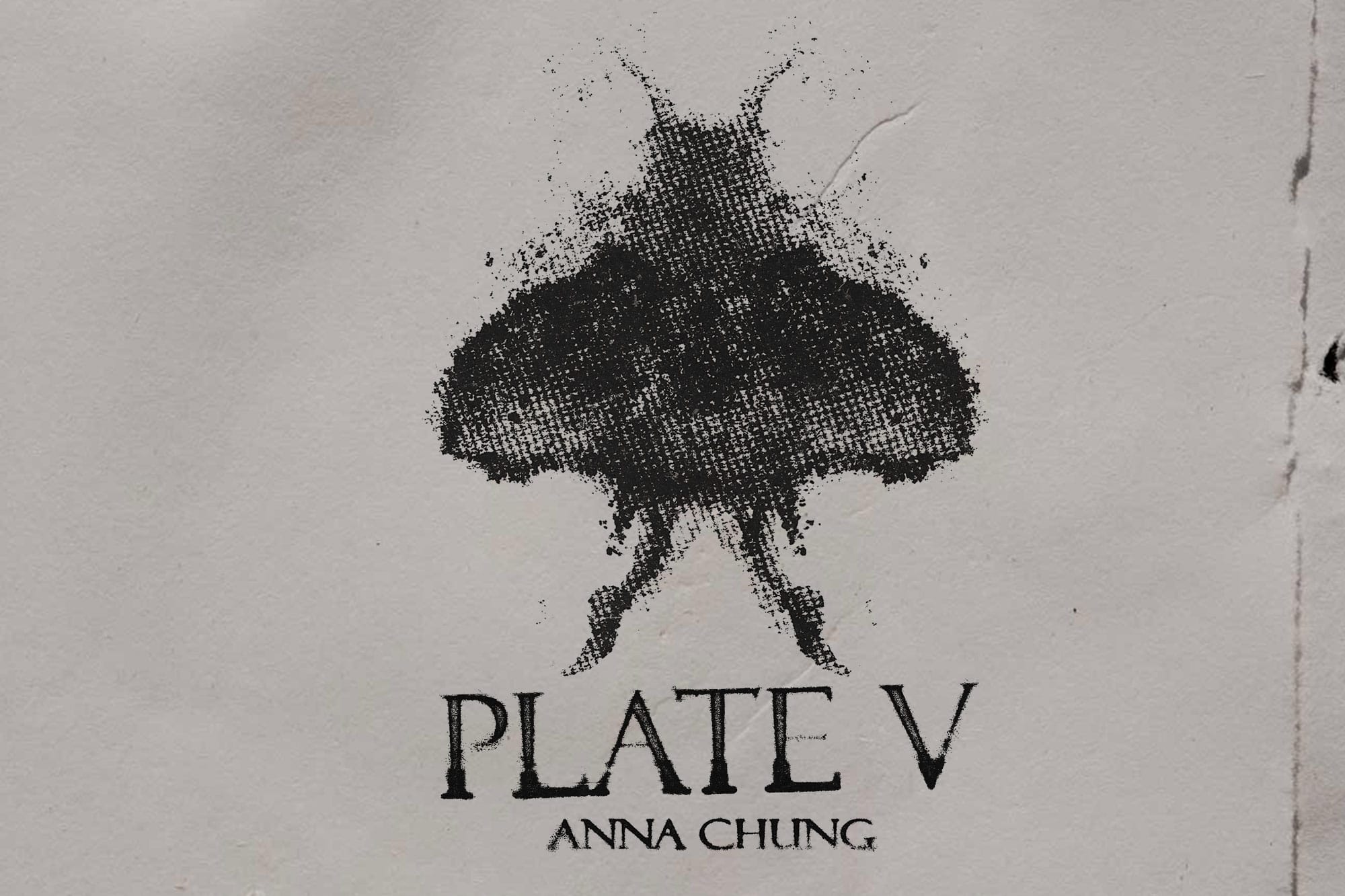
“I mean, come on,” he kept saying, chuckling. “What about this one, then. Plate V. You really can’t see anything? Some kind of mothman?”
“No,” I laughed. “Stop pressuring me, I really can’t.”
“Alright.” He relented, but he seemed really pleased.
I loved my new job.
The staff were affable and generous with compliments. There was a new cave system I was going to help map. I’d always been susceptible to praise—it made me a good student in college, always trying to please, and that attitude propelled me all the way through grad school. Suddenly I was in my 30s, still chasing after the feeling of a teacher’s warm regard.
This might actually be the best job ever!
They gave me some fancy hiking gear, the kind you’d find at an expensive outdoor outfitter. I was also given a headlamp, radio, and video camera to record what I saw. My supervisor had a matching radio at his hip. He wanted me to give a running commentary of everything I encountered along the way. While I suited up for my first venture, he sat beneath a tent several paces away with the specialized echolocation equipment. Other workers—minerologists and geologists—milled about. I’d tried talking to a few of them, being somewhat knowledgeable about crystals myself, but they struck me as strangely ignorant and shy.
Before heading into the cave, my supervisor gave me a thumbs up. Grinning, I returned the gesture. That first trip was a quick one, since I was directed to survey only the frontmost section, where you could still see a circle of day-brightness leaking in. I panned the camera slowly so as not to give my future viewers whiplash and described the appearance of some smooth grey stones of varying heights. To keep out any definitive judgement from my delivery, I didn’t even call them stones, just cylindrical flat-topped projections ranging from 1 to 3 meters tall. There was an interesting algal or fungal growth on the walls. This I referred to as “a shiny and diffuse loose adhesive layer.”
When I finally emerged, a cheer went up among those gathered to watch, making me feel like quite the explorer.
After that, prior to entering a new section, my supervisor would unroll the partial map devised via echolocation and direct me on which paths to take and approximately where to go next. I wondered what those branches would be called once the cave was cleared for tourists.
“Probably something like ‘The Devil’s Toilet’, right?” I joked.
“Nuh-uh,” my supervisor said, putting his hands on my shoulders and forcing me to look at him when I shared this moniker. “Don’t get creative on me now.”
What's with all these weird rules?
He had so many weird rules. I wasn’t ever allowed to play back the video footage I created, and my running commentary had to follow a strict script. I was allowed to describe something I saw as ‘thin’, for example, but the moment I tried comparing it to anything, using the phrase ‘thinner than a ____,’ my supervisor cut me off. Apparently, my observations needed to be understood within a vacuum, disconnected from the rest of the world. If I ever stopped talking for more than 5 minutes, the radio crackled with a request for an update. Maybe he was uncomfortable with silence.
Still, I enjoyed the work. More and more sections were completed, to my profound satisfaction. I even became brave enough to make suggestions to the onsite team about what protocols to implement. They always looked at me with a kind of awed disbelief when I did so, but I usually got my way.
The minerologists and geologists muttered amongst themselves when I proposed to start bringing back rock samples.
“You know, because the makeup will differ depending on the depth of each layer,” I reminded them.
“Yes… of course…”
They seemed skeptical about my ability to take collections safely, which offended me, seeing as I’d navigated hazardous lab environments before. My old PI was obsessed with studying fluorine reactions, and in some of my personal experiments, if I didn’t grease my glassware liberally, the friction risked setting off an explosion. Not that this eased anyone’s minds.
When I reached the deepest part, I became too lazy to join everyone else in the tent for the lunch break. Instead, I clipped a toolbox to my belt filled with trail mix and dry cereal and munched on those mid-crawl, cradled in the spiralling dirt. My supervisor looked like he wanted to intervene, but his boss insisted there wasn’t any harm in what I was doing.
“We’ve progressed this far,” she said. “There may not ever come a Eureka moment.”
During these lulls, he and I would exchange lame jokes over a private radio channel. I liked hearing details about my supervisor’s life and history. He was a well-traveled guy, and had been to all sorts of remote places, from Mt. Everest to the Dead Sea. But he didn’t like spelunking.
Finally, on a cloudless sunny day, we finished the project. The entire cave system had been mapped. I met with my supervisor indoors for only the second time in our brief acquaintance. When I arrived, the floor was in a state of complete disarray—desks emptied, files thrown haphazardly into boxes, trash bags spilling over with shredded paper. An IT person was wiping the computers. I half-expected the entire office to collapse into itself, like breaking down a cardboard box.
He still had some time to prepare an instant coffee.
“I hope you’ll give me another call if you ever need a cave person.” That was the nickname I’d given myself.
My supervisor tried to smile, then groaned and put his mug down, rubbing his palms noisily over the skin of his face.
“Listen. For some reason I like you, so I’m only going to say this once: don’t try to return here again.”
“But… why?” I’d thought about going for one last celebratory caving adventure, especially after memorizing each nook and cranny like the back of my hand.
He scoffed, shaking his head slowly. I didn’t like how it seemed like he was mocking me.
“That cave. Couldn’t you feel it?”
The silence that followed was like when a teacher called on an unprepared student in the middle of class. I opened my mouth to speak, but he barrelled right over me.
“It’s alive. And no, I don’t mean in the sense of the geological Gaia hypothesis, where we think of the earth for all intents and purposes as a single entity. I mean that the cave is aspirating.”
I didn’t believe him and said so, crudely.
“There’s a very specific reason for why we picked you,” my supervisor continued. “This creature presents a novel, ‘consciousness-based’ defense system. Simply put, the moment someone inside it so much as wondered if it was sentient, it would kill them. It has done this before.”
“Why didn’t I find any bodies, then?”
WHERE ARE ALL THE BODIES?!?!?!
The man swallowed queasily. “Because it kind of… sucks them in. We tried digging to find the bodies, and using ground-penetrating radar, but it carried them too deep. Perhaps miles.”
“Miles!” I barked.
He looked away guiltily. “So you see why I didn’t warn you before. And now that you know, you can’t ever go back. Seriously, there were all kinds of bets about if you’d actually manage to figure it out, if you’d notice the obvious signs, but you never did. You were the perfect candidate for the job. I never expected to find someone so… aggressively mundane, so limited. Maybe if you were a biologist we couldn’t have hired you. They tend to take a more holistic approach to things…”
“Hey crazy guy, get away from me,” I said. By then I was super freaked out.
Things are starting to get a little bizarre...
My former-supervisor just shrugged as if nothing mattered anymore, not even the loss of my previous good opinion of him. He turned and left the office without finishing his instant coffee.
I swore to myself that I would just try and forget this bizarre encounter, that I wouldn’t believe a word he’d said. At least my bank statements proved I was paid through. I poured out his mug at the communal sink. As I was rinsing it, I hefted it up, wondering if I should keep it as a souvenir.
But then I looked at the far wall, where that damned inkblot from the Rorschach test I took on my first day was taped to a whiteboard: Plate V. Several of the staff members had drawn colorful arrows pointing at it, along with the cursive phrase:
‘Definitely not a mothman!’