
🔭 The abyss in the depths of her eyes
by Isis Aquino and translated by Monica Louzon
Michael Allen Rose

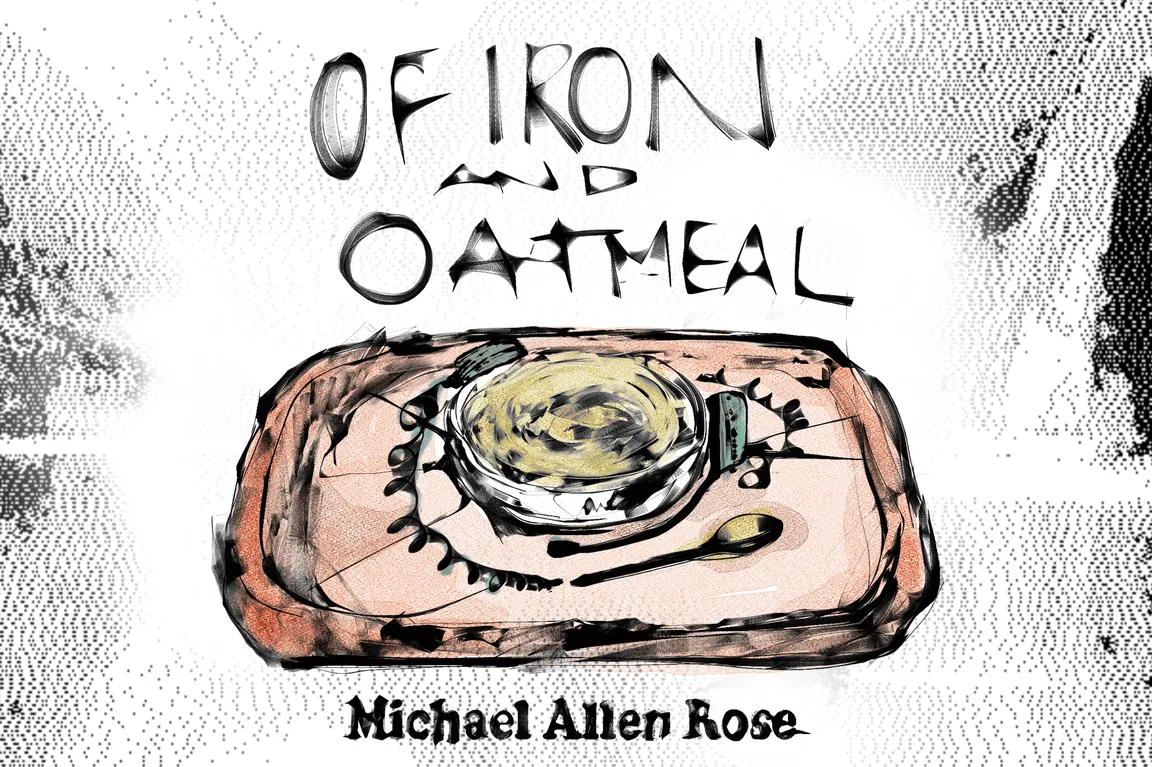

I’m not very happy about it, but I ate the oatmeal.
I got the job through my father, who was a high-falutin’ military muckity-muck with too much pull, brass balls to match his medals, and far too much confidence in a son who would rather play with himself than with guns and knives. Each time he would throw me a football and it would hit me in the face—sending me crying into the house—a little piece of him fell off and died, squirming on the lawn. He bought me my first BB Gun at the tender age of six and took me out into the backyard to shoot at cans. I fired in earnest, missing the cans entirely for the duration of an entire load of BBs, finally hitting the neighbor’s dog with the final shot. The dog yelped, sending me into a crying fit. Even as my father assured me that I had not killed the dog, I screamed and apologized to the gods. I felt worse than Hitler. I would not stop bawling until he took the BB gun from my outstretched hands and, muttering, retreated into the house.
As a teenager, things got worse. I became moody and turned inward. My father pounded on the wall, trying to compete with my Bauhaus and Sisters of Mercy records. He bought me army green t-shirts, I scrawled messages on them in black Sharpie. I was too lazy or stoned to check my spelling, which meant that I often went to school with messages like “I only do whut the vices on my head teel me to.” You can imagine my popularity level soaring through the roof like a balloon made of pig shit.
My father tried to make me call him “sir,” but instead I started referring to him as “The General,” which he absolutely despised. “That’s incorrect! You know damn well I’m a colonel!” He’d ground me. I’d sneak out. He’d get some poor sucker to watch me. I’d befriend my guard and take them out partying. But, despite this acrimony, we both survived, and my father, to his credit, just kept shaking his head and pushing. He was practically a modern-day Sisyphus. When I graduated high school (with straight C’s), I was ready for a life of hanging out in the basement, working part-time at a record store, and trying to score pot from hippie chicks without standards. This, however, was not to be: in a last-minute Hail Mary play, my father shot and scored at the buzzer, landing me a “job opportunity.”
“Son?” he asked, barging through the door of my room, “I’m coming in.”
“You’re already in,” I muttered.
“Get up. Come on. You’ve got a job interview this afternoon.” He stood stick-straight, years of military service having fused his spine into attention.
“But I—” I sputtered, before being manhandled out of bed and unceremoniously dumped into a suit jacket and shoved toward the dresser.
“Don’t worry. It’s civilian. You’re not being forcibly enlisted.”
“Are you sure?” I asked, removing the jacket so I could put on something resembling clothes. “A group of dudes with papers and handcuffs aren’t about to jump me and make me sign things?”
“They won’t allow that,” said the General, unconvincingly.
As we drove, I tried to ask questions: “What’s going on?” “What kind of job?” “Why are you doing this?” “Do you have any prescription medication? I have a headache.” and the like. Silence was my only answer until we pulled onto the base. The guard saw the sticker on my dad’s car, saluted, and we blew through the gates. I had been on the base before—a couple of times—and it always made me feel weird. I was no terrorist, but I always felt like I was waiting for some soldier to see the inside of my head, assume I was some kind of communist, and shoot me. I was glad that, despite being a military family, mom insisted we live off base and do our best to fit into townie culture.
We pulled up in front of a large, white three-story building on the east side of the base. I had never seen it before. There was a sign on the well-manicured front lawn, with large brown block letters that read: “LAUBER MILITARY TESTING INSTITUTE.” I convulsed, a symptom of what I called “mild tourette’s” and what the doctors called “general anxiety about life.”
“Go ahead,” dad commanded, “Doctor High is waiting for you.”
I snickered, and he cuffed the back of my head, causing my vision to flicker.
“Listen, do what they tell you, and do good work,” he said.
“When do I get picked up?” I started to ask.
He leaned over and opened the passenger side door, shoving me out unceremoniously. “They pay weekly. Have fun and do what they tell you.”
Before I could mutter my distaste, the car was already halfway down the street and turning the corner.
Receptionists can go one of two ways, stereotypically speaking. One, they can be frumpy, no-nonsense, and a little scary. Alternately, they can be sexy and delightful, like a sweet song floating on the breeze. The receptionist at the Lauber Military Testing Institute was the rare combination of both at once.
The lobby was decorated with 1970’s furniture, a wash of wooden paneling, and comfortable looking couches. A pristine, gleaming white desk, looking far too modern for the room, stood imposingly opposite the front doors. Behind the desk, a young woman sat typing something into a computer. She was a redhead, the waves of her hair cascading like seawater across the shore of her shoulders. I looked her over and her plunging neckline revealed the edges of large, full breasts, with just a tiny slip of light blue lace showing beyond the collar of a maroon dress. She looked like a model, not a military receptionist.
Shyly, I approached the desk, unsure of what to say. I stood there, dumbly for a minute, listening to the clicking of her keys. Finally, I cleared my throat.
“Fill out the form, bring it back up here when you’re done,” she said, never looking up. Her hand left the keys long enough to pull a clipboard from behind the desk and push it across to me with ruthless efficiency.
“I’m here for a job?” I said, hesitantly, “My father is—”
“Fill out the form, bring it back up here when you’re done,” she said, louder this time, still focused on the screen in front of her.
I took the clipboard from her, wordlessly, and took a seat on one of the ratty orange and brown patterned love-seats. Dad hadn’t said anything about filling out forms—I had assumed this was a done deal, whatever it was. The form was long and detailed, and became more than a little confusing as it went on:
Name: Robert Patton McKinley.
Age: Nineteen.
Are you now, or have you ever been a member of the Captain Video Telephone Fun Club? No. I don’t know what that is, and I was born after landlines went extinct. And video, for that matter.
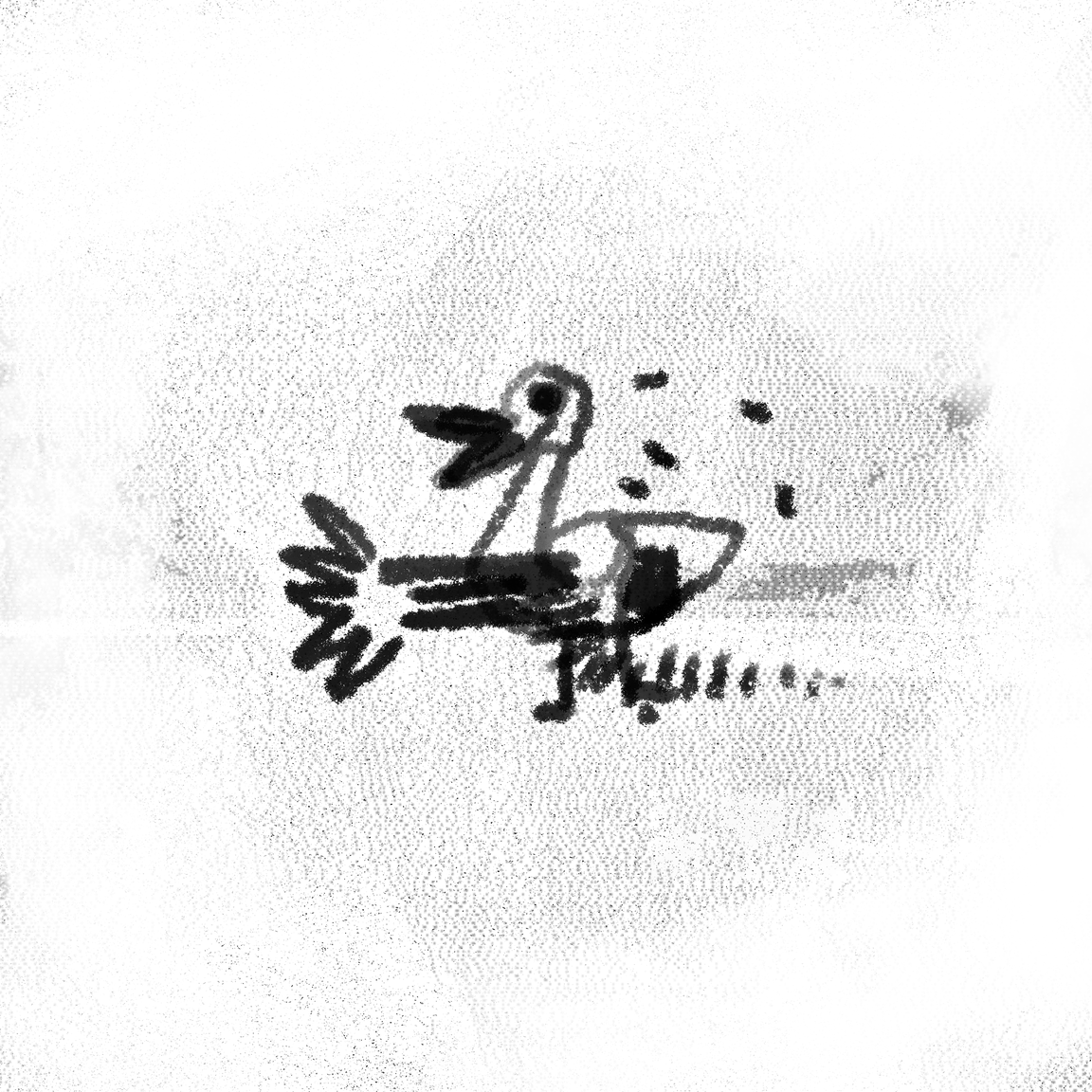
It was generally pretty easy until I got to questions like boiling point, facial symmetry ratio, and weight of edible meat contained in physical form. Drawing on the methods I’d perfected in high school, I sketched some duckies with machine guns in lieu of writing things down. Perfect.
The hot lady receptionist didn’t say much when I handed her the clipboard back. I watched her eyes scan it over without much interest, then she shrugged and pointed to her right. “Through the doors, to your right. Have a seat in there, and you’ll be called when it’s your turn. Bathrooms are to the left. Don’t drink or eat anything until after your interview. Thank you.”
“What am I applying for?” I stood there, blinking. She squinted at me, looking me over from head to toe, and decided something, as her eyes went off like flashbulbs and she sighed with heavy theatricality.
“Follow me.” The receptionist walked me through the double doors and into a huge rectangular space, cubicles receding into the distance and blurring into a soupy stew of noise and motion somewhere on the horizon. The walls were enormous, spattered with giant motivational posters, as big as unrolled elephant skins. It reminded me of a barn, only instead of animal shit, it smelled like coffee and artificial fruit with an undercurrent of nervous sweat.
“This is a call center? Is this a phone job? I thought it was a Military Testing Institute.”
She chewed her gum briskly, her eyes narrowing. “It is. It’s lots of things.” The gum snapped like a gunshot and something inside me convulsed like an angry hiccup. “Just follow the guidelines and you’ll be fine.”
The calling floor was swarming with people, men and women, all wearing little red and white name tags. Before I could ask any further questions, the receptionist vanished, and I was left alone at the mouth of this bustling hive of activity. A portly man with too many teeth grinned his way toward me. His smile looked permanently etched into his skull, like a scar. A frown would look unnaturally artificial on this man’s face, unsettling like cracking an egg for an omelette and finding a live baby alligator.
“Robert? Hi there, nice to meet you, I’m Barry.”
The large man shook my hand, with a firm grip. I watched his arm fat jiggle as I found myself asking “How did you know my name?”
He ignored this. “Glad you came in. Very excited for your interview. Follow me. You find the place okay?” He strolled through the maze of cubes with purpose, as I jogged to keep up.
“My dad dropped me off.”
“Good, good, here we go.” We arrived at a small, undecorated office to the side of the large room. A table of dark, scarred wood lay in the center of the room. The walls were blank, no windows or doors besides the one came through, except for a rectangular metal portal on the side of the room. It was painted gray, with hinges and latches affixed to the corners. A small counter jutted out below. “Sit down, make yourself comfortable.”
I sat in the chair nearest to me, allowing myself to plop down with authority. The castors squeaked. Meanwhile, Barry circumvented the table, passing near the metal port in the wall, and tapped on it three times with his knuckles.
Almost immediately, the latches popped open, and the hatch opened up. A pair of gloved hands pushed an orange cafeteria tray through the opening, and left it sitting on the counter. Barry picked up the tray and brought it over to the table, setting it in front of me, and taking his own seat.
It was a bowl filled with some kind of fresh, hot porridge. The aroma wafting from it reminded me of the country. It was a yellowish color, not quite off-white. Chunks of some unidentifiable substance broke the surface here and there like icebergs in a tiny sea. Fruit, maybe? A large spoon was arranged next to it, atop a napkin.
“What is this?” I asked.
“Oatmeal. So, can you tell me a little bit about your experience? Have you ever done phone work before? Customer service?”
“Oatmeal?”
“Yes. Is this your first phone job?”
“Yeah, I… haven’t really done… why is there oatmeal?”
“Go ahead, just eat the oatmeal.” I noticed he had the clipboard with the application I’d filled out earlier. I didn’t remember seeing anyone hand it to him.
“How did you…?”
“It says on your application that you haven’t really had too many regular jobs before. Other than the record store? Is that right?”
“I guess not, I mean, I’ve done freelance work for people, yard work, watching my friend’s convenience store while he grabs a smoke. But I’m sure I can figure it out. I’m friendly. This can’t be too much different from shooting the shit about music, can it?”
He laughed way too hard at this, an ear-shattering, donkey chortle. If he could, I feel like he’d have reached all the way across the table and curled his arm around me to smack my back.
“Yes, I’m sure you can handle it. There are scripts for all of this. You just follow the script, based on what the caller needs. Simple. Anyone can do it. Do you need cinnamon? Sugar?”
“What?”
“For the oatmeal.”
I stared down at the still steaming bowl. “No?”
“Okay, well, everything seems to be in order. Go ahead and just eat the oatmeal, and we’ll get you set up with a headset and a cube so you can start right away.”
He folded his hands under his chin, leaning his fat head on his knuckles, and fluttered his eyelashes at me. Maybe because I was uncomfortable with Barry staring at me, I didn’t know what else to do, so I reached down, grabbed the spoon, and pushed it down into the oatmeal. It enveloped the utensil like a boot in a swamp.
“I’m not really hungry. Can I… just…?” I didn’t really know how to finish that question.
Barry frowned and stood up. He walked to the little metal door and knocked on it again. Immediately, it slid open, and two hands floated through the opening. They handed Barry two shakers, one marked “Brown Sugar” and the other marked “Cinnamon.”
“Here. Dry additives only. Liquid changes the efficacy.”
I took a long look before reaching out and grabbing the shakers. Upending them, I shook out a few granules of each, and gave the bowl a stir.
The first bite was pretty okay. It was bland, but not unappealing. I caught eyes with Barry and put another spoonful into my mouth. It didn’t take long to finish the bowl. When I did, I felt the nervous energy suspended in the room leak out like air from a balloon.
“Good. You like softball? We have a softball team. Meets Thursdays.” Barry practically pulled me to my feet and ushered me out of the room. “Take a fifteen minute break every four hours. Shifts of eight or more get you a half an hour lunch too. That’s paid.”
By this point, he was pulling me down a fluorescent corridor of cubicles. On every side of me, dozens, maybe hundreds of people buzzed like hornets in a hive, talking on headsets, clicking computers, poking tablets with their fingers, and generally creating a cacophony.
Before I could ask anything further, Barry pushed me gently down into a rolling chair. Before me, on the particleboard desktop surface, a plastic-wrapped headset and a bagged cordless mouse lay prostrate before a large monitor. The sound of a desktop computer whirring away quietly reached my ears from beneath the desk, before Barry spoke again.
“Follow the scripts. Here’s your manual. I’ll check on you in an hour or two.”
A well-used photocopied booklet hit the desk in front of me, startling me. It was thick, and as I paged through it, I saw endless columns that all seemed to be cross-referenced with computer codes. Responses, replies, and scripts for every scenario. I wish I’d asked what we did here. I wish I’d asked where the bathroom was, as I held back a dribble of fear pee. What the hell was I supposed to do now? I moved the mouse inside its little baggie, and the screen blazed to life.
First name. Last name. Hit enter. A diagram of how to put on the headset properly, and then a whole litany of instructions. Step by step. Everything I needed to know, with hyperlinks and search term highlights.
It appeared this was a call center for a variety of different departments, which is why the instructions were so intricate. The book was divided into dozens of sections. I flipped through with my thumbs, and saw everything from “Tax Code Department” to “Hydrogen Bomb Victim Help Line” to “Area 52,” calls to which were to be answered specifically: “Area 52, there is no Area 51, it doesn’t exist, and it’s one number less anyway, which makes it objectively worse. Please reply ‘affirmative’ if you’ve found the Voyager golden record and are extraterrestrial to planet Earth, otherwise hang up, check your number, and dial again.”
I plugged my headset into the port, and instantly, a digital series of beeps sounded off. I clicked the “answer button” on my screen and words flashed across it like a karaoke machine. The display code read “OCR.”
“Office of Civilian Relations, this is Robert, how may I help you today?”
“Hello? Is this America?”
Her voice was small, a lick of some sandy foreign accent rolling around the edges of her consonants. I didn’t feel nervous, but for some reason, I was sweating. I patted down my forehead with my free hand, and it came away moist and clammy. I wiped it on my jeans and continued.
“Yes ma’am, this is the Office of Civilian Relations,” I nervously replied, scanning the screen and the book for responses and codes in a whirl of letters and numbers, “How may I... help you?”
“There are troops here on my farm. They are scaring my goats and making my children nervous.”
I looked at my chart of handy responses, my finger tracing over the grimy, yellowing laminate protecting the paper until it came to rest beneath “Troops in yard/farm” in the “case” column. Subsection C under the row read “frightened/upset ungulates.”
I input the code from the book on the screen, and immediately, a series of windows popped up with scripts, definitions, an FAQ, and several high-definition photographs of goats.
“I understand and I’d be happy to assist you. Where are you located?”
She spelled the name of her city for me, a place with consonant pairings I was unfamiliar with.
I noticed a blinking icon in the corner of my display. I clicked on it and a visible waveform showed up under a window entitled “full spectrum analysis.” The computer was recording the call and responding to me and this woman in real time. Before I’d even finished typing in the name of the city, maps were opening, and the script highlighted some words and scrolled down.
“Is this Ms. Suri Ghorbani?”
A pause. “Yes.”
“Excellent, I just need a little more information,” I said, reading off the screen. The cursor blinked in another field with a neon green arrow.
“Okay, fine.”
I had an odd thought, and needed to express it. “Do you speak any other languages besides English?”
The screen immediately flashed a bright red pop-up window that said “DO NOT IMPROVISE. STICK TO THE SCRIPT.”
“I’m not speaking English. I’m speaking Farsi. What are you talking about?”
Did I somehow learn to speak Farsi without even trying? Was I some kind of savant?
“It’s the translator,” a strange, low, gravelly voice echoed in my ear.
“Excuse me?” I asked, wondering how the lady changed her voice so thoroughly.
“I said it was fine. What information do you need? My goats are freaking out.”
I read a list of contact information queries from the screen, and Ms. Ghorbani quickly answered them. I could tell she was losing her patience. “Listen, I complained to one of the officers here, and they gave me a card with this number, and I need you do something. Have you ever tasted the milk of an upset goat? It’s terrible.”
In large, red, white, and blue letters, the screen kept spitting out responses.
“If you can hold on just one moment, ma’am, I’ll take care of that for you.” I stared at the screen. How was I supposed to take care of soldiers invading a farm on the other side of the planet? I figured maybe the system would tell me how to log a complaint for her, or at least have me read some kind of propaganda about America helping out in her area—with emphasis on gratitude and patriotism and such.
Suddenly, my guts started acting funny. It was like an attack of irritable bowel syndrome, with painful cramps and rumbling pockets of gas.
My guts were rolling and boiling. A low moan escaped my lips as I rubbed circles around my belly, trying to coerce my guts to cooperate. The pain was getting worse. I rotated the chair idly left and right as I swiveled my head, looking for anyone that seemed like a supervisor. Seeing nobody, I fought back a wave of nausea and struggled to get up, but when I tried to stand, I couldn’t even get off the chair. I felt like my digestive system weighed a thousand pounds.
“Hello, are you still there?” asked Ms. Ghorbani.
“Yes, sorry—” I managed to grunt, as I doubled over. I reached for the headset, fearing I’d end up being sick and making a mess on my first day of work. I needed to find a restroom, stat.
Almost immediately, the computer flashed another red window, and that same voice from before, the low, gravelly one, appeared in my ear. “Don’t remove the headset.”
I felt a tickle rolling up my throat, like a long hair was stuck at the very back, irritating my uvula, making me simultaneously gag and cough. My tongue flattened to the bottom of my mouth, and I felt my cheeks puff up as bile began to rise and soak the back of my gums. I tried desperately to move the mouthpiece away from my face before I vomited all over it, but my arms disobeyed, keeping it pressed against my lips.
“Hello? Hello? Are you listening to me?” I heard the voice on the other end of the line becoming increasingly irritated.
Just then, something wet and bulbous forced its way into my mouth. I felt full, like I’d given birth to one of those novelty jawbreaker candies. The chunk of matter pulsed and pushed its way forward. Grimacing, my eyes closed instinctively to save myself the humiliation of barfing all over myself and my work station. With the sound of a particularly large turd hitting toilet water, the chewy mass scraped past my teeth and outward. I peered down at my mouthpiece, trying to keep myself grounded. It was fine, and no half-digested food was piled in my lap. I blinked a few times.
“Can I speak to your supervisor, please?” I’d almost forgotten about the person I was talking to in my brief moment of panic.
I tried out my mouth. All the muscles seemed to work as usual. “I’m sorry, ma’am, there was a momentary... crisis. Please, let’s continue.”
“I don’t know what—” Her voice was cut off by a loud “schloomp.” I imagined a watermelon being emptied of its contents with a particularly large plunger.
The screen opened a window displaying a large “10”, and text underneath read: “Operator, please hold for the retrieval process.”
The number changed to a “9”. Then, an “8”.
A sound came through the speaker. Like a hose being dragged through wet grass.
“Ms. Ghorbani?” There was no reply, but a pop-up window informed me that I should relax and silence any extraneous speech or utterance.
“7.” I felt something vibrate. My mouth opened up slightly like I was about to go in for a kiss. I was not involved in this decision. “6.” On “5” I felt something slide into my mouth. It was warm. I gagged a little. “4.” I was practically paralyzed. I wondered if this is how coma victims feel? My senses still worked, but I was no longer in control of what I was doing. My brain simply wouldn’t send the electrical impulses to my muscles. On “3” I heard “relax” in my mind’s eye. Not audibly, not with my ears exactly, but with the part of my mind that processes hearing. I know that sounds weird, but it was like when you’re hypnotized at one of those comedy shows where they make you think you’re a turkey, or forget the number seven. Your brain knows none of it is real, but you’re doing these things anyway, and you can’t really understand why, and somehow, you don’t really care.
“2.” It’s kind of like being on nitrous oxide. Part of your brain is there, but it’s floating on an inflatable purple hippo in a swimming pool, not really giving a shit whether or not you’re cognizant. The lump in my mouth slithered down my throat, and as I tried to gargle, a strange sense of calm came over me. My brain must have been firing shots of serotonin and dopamine into the air like a celebrating Texan. “1.” “0.”. The timer disappeared, and I sat back in my chair as a pop-up window declared the call successfully completed. I looked around, trying to peer into the other cubes to see how my colleagues were doing, but they were designed so that everyone was visually isolated. I clicked the “Break” button in the bottom right corner of the screen. Immediately, a 15-minute timer popped up and began counting down.
Nobody was in the breakroom when I found it. The vending machines stood against one wall, arranged like tombstones, with various generic names like “COFFEE,” “SNACK,” and “SODA” marking where junk food went to die. In the corner stood a larger machine, unmarked. A stack of wax-coated paper bowls towered next to it, along with a canister of individually wrapped plastic spoons. Behind the glass, a series of colored LED lights illuminated signs.
“Apple Cinnamon, Strawberry Cream, Maple Brown Sugar, Plain…” I read aloud.
“How’s it going?” a loud voice startled me. I turned to see Barry, grinning that huge plastic grin, leaning against the door frame. “Break time, already?”
“I didn’t feel well,” I said.
Barry walked over to me and put a reassuring hand on my shoulder. It was cold and clammy. “You’ll get used to the job. It takes a little time, but soon, you’ll be in and out of calls like clockwork. Heck, I bet you’ll be on the leaderboard in no time.”
“I don’t know. I think I’m sick. Maybe I should go home?”
“Nonsense, you just need a pick-me-up. Here, pick a flavor.” His fingers hovered over the buttons on the colorful, wordless machine. With his free hand, he grabbed a bowl and slid it into an opening in the machine’s front. “You like Raisin Walnut?”
“I don’t think I want any more oatmeal right now. I don’t know if that first bowl messed up my stomach or what.”
“Trust me, this stuff is just the thing for stomach problems. Good, stick-to-your guts kind of stuff. Here, try this. Berries and cream. Personal favorite.” He pressed a couple of buttons and the dark red LED light blinked a few times. A chute in the machine started pumping out hot, steaming oatmeal, and a few seconds later, Barry turned and presented it to me.
I looked down at it and then up at him. I took a bite. It was actually pretty good. The taste was bright and fruity. I thoughtfully chewed it and swallowed. As soon as I did, I heard my stomach gurgle, and without warning, patterns and lights started to flash before my eyes. My head went woozy and I stumbled, but before I fell over, a feeling of peace and tranquility flooded in and then, I felt better.
“Now, let’s go back to your desk. Try another few calls. I’ll be wandering the floor if you need me, but now that your stomach is full, I think you’re going to be fine. Sometimes you just need a little refill.”
Barry led me back to my cube, which showed just a few minutes left on the clock. I sat down and took a deep breath, glancing over my shoulder at Barry. His smile hadn’t moved, but something in his eyes was different. Like, his mouth was smiling, but his eyes were doing something else entirely.
I put on the headset and sat, staring at the countdown. I had to admit, I was feeling better than earlier. The timer reached “0” and immediately, a call came in. I read my lines off the display.
“Office of Contamination and Isolation, how may I help you?”
“Yes… hello. I was told to call this number after being diagnosed with a virus?”
“Can you read me the code written on your intake slip?” A little purple box awaited my input.
“Sure. It’s um… 3A7-C19?”
“Perfect, thank you. Your name, sir?”
“Todd Berryman. Do you need my insurance information or..?”
“One moment.”
A map window appeared and I watched the system track the call in real time. Little by little, it zeroed in on an address, and I watched as a small arrow moved down the sidewalk from a sky-high view.
“How long have you been experiencing these symptoms?” I asked, prompted by the screen.
“About a week or so.”
An overlay appeared—it looked like a heat map—and the little arrow turned dark red. “Please hold, sir.” My stomach burbled again. Apparently, the oatmeal had done little to settle it. This time, there was no pain, just a lot of noise. I couldn’t hold back a burp, and immediately felt my face turn red with embarrassment.
“Excuse me?” asked the man’s voice on the other end of the line.
“Be still,” said an entirely different, guttural voice. I wondered if he’d heard it too?
A tendril of something hit the back of my throat like I was upchucking a strand of uncooked spaghetti. My cheeks puffed outward and I made a weird noise like a rapidly deflating balloon. My lips parted and I felt something dribble over my gums. My eyes closed involuntarily and I hacked up a wad of phlegm. Still coughing, I panicked, crossing my eyes trying to look at the headset. Everything looked normal. I swallowed, trying to maintain normal breathing.
“What other information do you need?” the man asked. He coughed a few times, and then a sort of squishing sound came out of him. “Mmmfgh! Oh God, what’s mmmfgh!” The beginning of a scream was cut short.
I listened to the silence on the other end of the line. “Hello? Mister Berryman?”
Once again, the screen began its ten second countdown, encouraging me to remain still for the retrieval process. This time, I tried to stand up, but my limbs didn’t seem to be cooperating. My mouth began to open up. Frantically, I tried to take my headset off, but my arms wouldn’t respond. “No… no… no!” I said, kicking and thrashing. My movements were too small, too weak. Why couldn’t I move? It was like being stuck in slow motion in a nightmare. The countdown read “7…” “6…”
Shaking with effort, I managed to turn my chair so the headset cable wrapped around the arm. I felt something inside me tear as I wrenched my body to the side with enough force to unbalance me. The whole chair tipped over, with me attached. My head cracked into the floor, with only my shoulder saving me from a concussive blow. As I fell, the headset pulled free from my skull, still attached to the machine, and spooled around me like a long, black noodle.
I groaned, trying to control my shaking body, as the headset shuddered. On “3,” something liquid began to seep out, followed on the count of “2” by a mass of gray goo. It was the oatmeal, or something derived from it. It didn’t look digested; it looked alive. It piled up on the floor in a slimy, twitching glob, and began to emit a high-pitched scream. Pulling myself up on my elbows, I began to shuffle backwards, kicking at the pile, trying to stomp it down into the carpet.
“What the fuck are you? What is this?” I squealed, grinding the oatmeal into the floor. I retreated until my back hit the wall of the cubicle opposite mine, and sat there hyperventilating as the ooze began to vibrate. It appeared to be breathing, but my attack had broken it up into multiple dollops, many of which were curling up and turning black as I watched the thing die.
My nausea returned, and I gagged up a long string of bile. I was too weak to move, and just sort of leaned over and let it drip out of my gullet, a long, metallic string of grayish filth.
“Oh no, this is unfortunate.” It was Barry’s voice. I looked up, and saw multiple heads peeking out from their cubes all down the row. Some were shaking their heads, a few looked frightened, but they all had the same look of calm resolution deep within their eyes. Barry was standing with his arms folded, flanked by two men in red shirts wearing security badges.
“What—?” I managed, before being hauled to my feet by the two security guards.
“It’s okay, it’s not your fault. This happens.” He looked down at the blackened lump that had sprung from the headset, lying still like scorched mashed potatoes. “That’s too bad. Two servings wasted. Usually, that’s enough for most people as a starter.”
They ushered me down a hall to a small room, similar to the one I had interviewed in earlier. Was that the same day? It felt so distant now. They sat me down in what looked like a dentist’s chair. I was too weak to resist and had to watch as they strapped me in. I was completely drained and could only turn my head. Barry’s smile was still in place, but his features showed some concern. He was looking at me with sympathy for an animal that had been hit by a car, when the prognosis wasn’t very good. I felt myself being lowered into a supine position.
“It doesn’t always take right away. Something to do with the employee’s metabolism. Maybe body chemistry. I keep telling them, we should start doing drug testing, see if marijuana intake affects the bonding process, but of course, they’re afraid if we do that, we lose the stoners, which, as you can imagine, make up a hefty portion of our employee base.” Barry chuckled as one of the red shirts wheeled over a cart with a large metal pot and some machines attached, whirring away quietly.
The other guard pulled the top off the pot and stirred its contents with a long, wooden spoon. The air filled with the unmistakable aroma of cinnamon.
Another figure appeared from the darkness, a woman, wearing a surgical mask and gown. “Please try to relax,” she said. “I’m doctor High, and I’ll be taking care of you today.” I noticed that Barry had put on a mask as well, and he hovered over my face. I could imagine that smile beneath the cloth and it looked the same.
“What’s happening? I don’t want any more oatmeal!” I cried, slurring my words. I felt a quick prick in the arm. They must have injected me with something.
“Shhh, it’s going to be all right. The oatmeal will heal you.”
“What the hell is it?” I mumbled.
While lying there in shock, flat on my back, Doctor High placed an endoscope into my mouth and down my esophagus.
“Don’t worry,” said Barry in a soothing voice, “The camera helps the doctor visualize your stomach lining to ensure that the feeding tube is positioned properly.”
I tried to sit up, to fight, to scream, but I was a mannequin.
“When the doctor can see your stomach, she is going to make a small incision in your abdomen. Next, she’ll insert the feeding tube through the opening. Then, she’ll secure the tube and place a sterile dressing around the site. Just FYI, there may be a little drainage of bodily fluids—such as blood or pus—from the wound, so we’ll keep an eye on that. The whole thing will only take an hour or so. We’ll be done before lunch.” He patted the side of the large pot. “Although, I don’t imagine you’ll be very hungry.”
My eyes pleaded with him, as I tried to speak around the endoscope. All that came out was “wffissttt.”
“What is it? Oh, we don’t know. Well, I don’t know. That’s way above my paygrade. Alien technology? Nanobots? A pact with demons? Some kind of virus?” He leaned in, conspiratorially. “Personally, I think it’s a combination of all of them. I think the government made a deal with the devil, who provided some kind of tiny alien robot that spreads and replicates itself like a virus. All we know for sure is that it helps solve America’s problems, and it makes for loyal and compliant employees.”
Picture a swamp, bubbling with gaseous emissions of sulfur. That’s what the oatmeal sounded like, as it pumped itself into the tube and began to fill my stomach cavity.
Later that day, I had taken a dozen new calls. Every single one of them successful. You get used to the process after a while. People say they can hear my smile when I talk to them on the phone. I think that’s true. I just wish they could see what’s behind my eyes.